
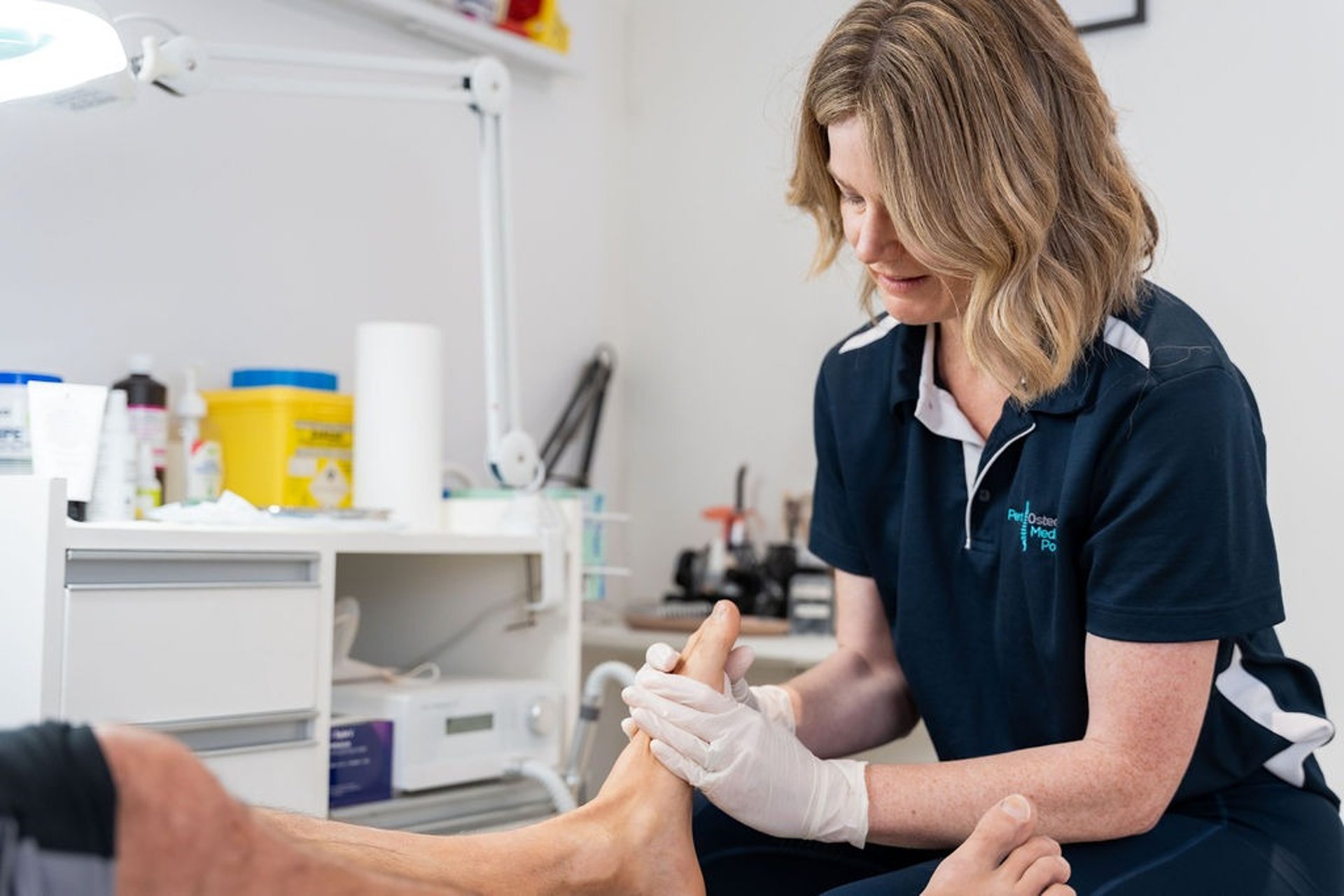
Podiatrist in Nedlands WA
Our feet are the foundation of how we move, housing a quarter of all the bones in the body along with dozens of muscles, joints, and ligaments. When something’s off in our lower limbs, it can affect everything from our posture to our daily comfort.
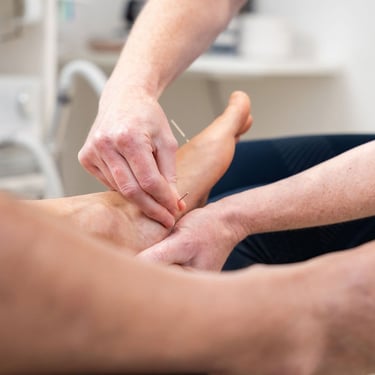
Podiatrists specialise in the prevention, diagnosis, treatment, and rehabilitation of foot, ankle and lower limb conditions. Whether managing pain, nail concerns, balance issues or injury recovery, podiatry provides evidence-informed care to help support function and mobility.
Conditions Commonly Treated by Our Podiatrists:
Ingrown toenails, corns, calluses, and fungal infections
Foot pain, bunions, or joint issues
Lower limb injuries and gait irregularities
Balance concerns and fall risk
Diabetic foot care and vascular concerns
Structural deformities and chronic conditions
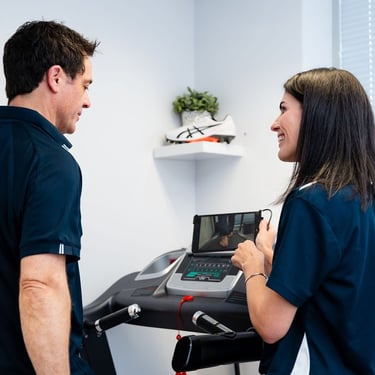
Your podiatrist will assess your unique biomechanics and lifestyle, using tools such as orthotic therapy, minor procedures, education, and tailored treatment plans to support your mobility and wellbeing.
Meet Our Nedlands Podiatrists
Our podiatrists are detail-oriented, caring professionals with a strong background in biomechanics, clinical foot care, and whole-body movement. With experience across general practice, sports injury, and complex conditions, they approach each patient with a balance of precision and empathy.
Meet our Podiatrists:
Sally McGinnity – Brings 18 years of clinical experience, with special interests in gait, performance footwear, and long-term foot health
Natasha Firns – Dual-qualified as a podiatrist and nurse, offering compassionate, clinically thorough care for complex lower-limb conditions
Paula Ceely - 18 years of clinical practice in both the UK and Australia, enjoys treating patients of all ages and has experience across all aspects of general podiatry.


Circulation Testing & Vascular Studies
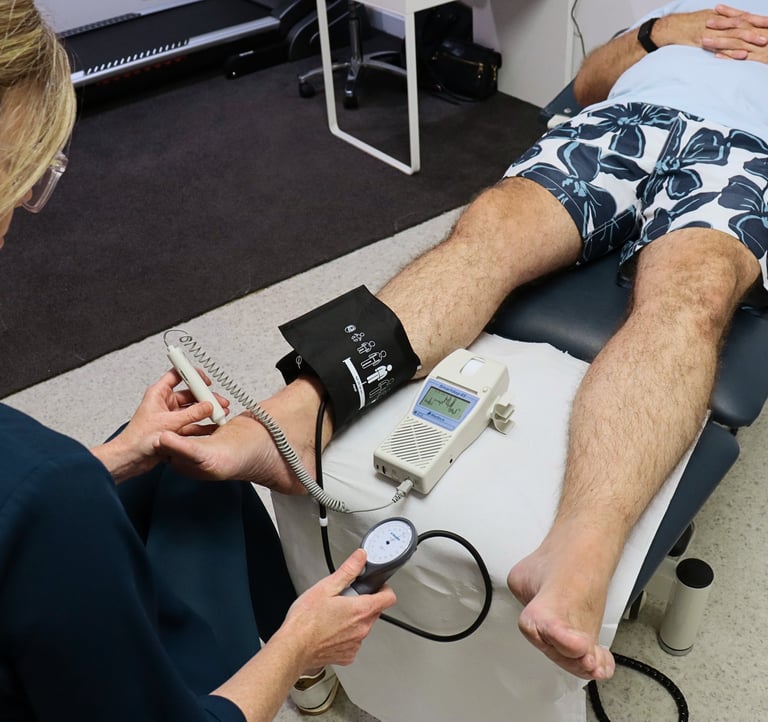
Ankle Brachial Index (ABI) and vascular testing is a non-invasive vascular assessment used to evaluate lower limb blood flow. By comparing blood pressure readings at the ankle and the arm, this testing can assist in identifying signs of reduced circulation that may impact foot and leg health.
Vascular testing may be used to help:
Screen for peripheral arterial disease (PAD)
Assess circulation in people with diabetes or cardiovascular risk factors
Support wound healing and clinical decision-making
Monitor changes in vascular health over time
Guide referral pathways where necessary
Training & Professional Standards
Australian podiatrists must complete a university degree in podiatry and maintain registration with the Podiatry Board of Australia under the umbrella of AHPRA.
Ongoing professional development is required to ensure the highest standard of evidence-based care. All practitioners at Perth Osteopathic Medicine and Podiatry meet these requirements and bring additional post-graduate experience to their roles.
Podiatric surgery requires additional specialist postgraduate training beyond undergraduate podiatry qualification.
Medicare and private health rebates are available for eligible podiatry services.


Reach us
(08) 9383 3350
Opening Hours
Monday - Friday: 8:00 AM - 4:00 PM
Saturday: 8:30 AM - 3:00 PM
Subscribe to our newsletter
Open 7 days
187 Stirling Hwy, Nedlands WA 6009
Reception Hours